
Teacher trainings, foldable microscopes & water testing kits: How “Inventing Tomorrow” is extending its life long after release
Inspired by the stories of students in the film, the impact campaign offers lessons on understanding global change for middle and high school students across America.
Teacher trainings, foldable microscopes & water testing kits: How “Inventing Tomorrow” is extending its life long after release
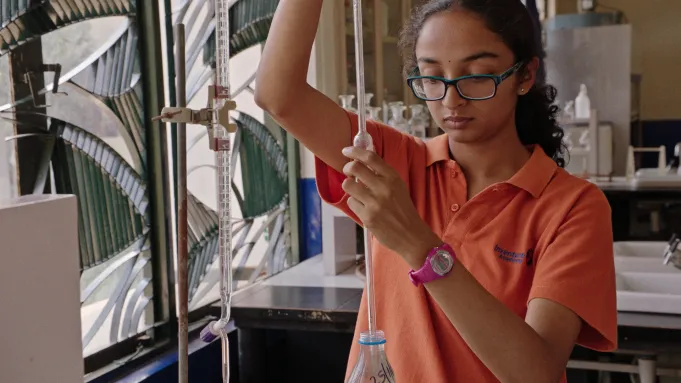
As parents and teachers around the country adjust to a new year of largely remote schooling, many are looking for resources to teach effectively about a variety of topics. In the absence of hands-on science classes, parents and teachers can turn to the educational impact campaign associated with “Inventing Tomorrow,” a Peabody Award-winning film that has captured our hearts and minds since its premiere at the Sundance Film Festival back in 2018. Directed by Laura Nix, “Inventing Tomorrow” follows high school scientists from India, Hawaii, Mexico and Indonesia—all driven to solve real environmental problems in their own communities—on their journeys to the International Science and Engineering Festival. The classroom materials use the stories of the students in the film to inform lessons for middle and high school students. The film’s educational resources include a remote-learning toolkit and a series of virtual teacher town halls, held in partnership with PBS and HHMI Tangled Bank Studios (the editorially independent production company of the Howard Hughes Medical Institute, which also served as co-producer on the film). HHMI Tangled Bank Studios was deeply involved as a partner in the project, and—among many other things—the partnership is enabling the… Read More
September 29, 2020
–
- Media Impact Funders
WATCH: Science journalism & going beyond the data
Scientific inquiry is being challenged as never before, and science denialism is increasingly prevalent, as efforts to propagate misinformation and disinformation grow more prominent. To reclaim and support the essential role of science in our society, funders are continuing to respond with a variety of grants that support the communication of science. In this webinar, we heard from: Richard Stone, senior science editor at HHMI Department of Science Education, and Jonathan Fahey, health & science editor at the Associated Press, on expanding their collaboration to support health and science reporting over the next three years. In fall 2019, the AP announced “What Can Be Saved?”, a series of multimedia stories that followed several intense efforts around the world to save or revive ecosystems. Indre Viskontas, neuroscientist and podcast host of Inquiring Minds, about using podcasts as a vehicle for educating the public on complex scientific information and its impact. Rachael Strecher, senior director of Storytelling Grants, Programs and Fellowships at the National Geographic Society, who will give us a preview of the National Geographic’s 2020 Storytellers Summit, a conference that brings together photographers, writers, filmmakers, illustrators and journalists to celebrate the art… Read More
January 8, 2020
–
- Media Impact Funders