
Here’s our year-end impact review—and our questions for 2021
Our key task for 2021? Bring more funders into the impact conversation.
Here’s our year-end impact review—and our questions for 2021
This year was slated to be our year of impact.
We started off with a bang in January at the Sundance Film Festival, where we released Decoding Media Impact: Insights, Advice and Recommendations, our impact report summing up seven years of research in the media impact space. Read More
December 7, 2020
–
- Katie Donnelly

Media impact and polarization: Science-focused film series offers lessons on breaking through the noise
How do foundation-funded media projects need to rethink their storytelling and distribution models in order to break through in today’s polarized environment? In this guest post, communications strategist and filmmaker Christine Arena of Generous Films shares key insights for funders from the novel approach behind Let Science Speak—a multi-media campaign designed to counter anti-science propaganda and rally more Americans around the critical work that scientists do. Let Science Speak is supported by the Hellman Foundation, S. D. Bechtel, Jr. Foundation, The Outrider Foundation, Margaret and Will Hearst, among others. Read More
October 27, 2020
–
- Christine Arena
MIF is launching a working group focusing on impact
To further explore issues related to media impact and assessment, MIF is forming a working group of funders who want to strengthen the field of practice. Here’s a bit of background on how we arrived at that decision: MIF has been regularly tracking the field of media impact assessment for the last eight years. Every month, we compile the latest impact-specific headlines and write original case studies and analyses to share in our Tracking Media Impact newsletter. We also feature the latest and most popular impact assessment frameworks and tools in a searchable database on our website. This work eventually led to the publishing of Decoding Media Impact, our comprehensive report analyzing the current state of media impact assessment. The report was also informed in part by a convening with leading practitioners in which we asked them to identify best practices, assess the state of practice more broadly, and explore new ways of doing media impact assessment. Since then, we’ve explored the latest developments in impact production, including the effects that COVID-19 has had on the critical role of the impact producer. Our goal with this working group is to explore how funders can… Read More
October 1, 2020
–
- Media Impact Funders
Teacher trainings, foldable microscopes & water testing kits: How “Inventing Tomorrow” is extending its life long after release
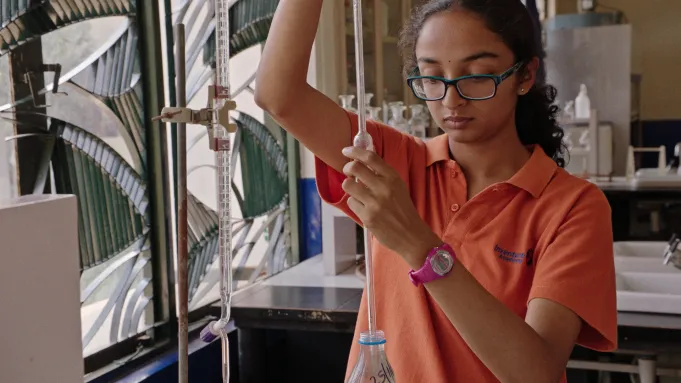
As parents and teachers around the country adjust to a new year of largely remote schooling, many are looking for resources to teach effectively about a variety of topics. In the absence of hands-on science classes, parents and teachers can turn to the educational impact campaign associated with “Inventing Tomorrow,” a Peabody Award-winning film that has captured our hearts and minds since its premiere at the Sundance Film Festival back in 2018. Directed by Laura Nix, “Inventing Tomorrow” follows high school scientists from India, Hawaii, Mexico and Indonesia—all driven to solve real environmental problems in their own communities—on their journeys to the International Science and Engineering Festival. The classroom materials use the stories of the students in the film to inform lessons for middle and high school students. The film’s educational resources include a remote-learning toolkit and a series of virtual teacher town halls, held in partnership with PBS and HHMI Tangled Bank Studios (the editorially independent production company of the Howard Hughes Medical Institute, which also served as co-producer on the film). HHMI Tangled Bank Studios was deeply involved as a partner in the project, and—among many other things—the partnership is enabling the… Read More
September 29, 2020
–
- Media Impact Funders
The latest tools for researchers and journalists interested in analyzing media trends
A host of new tools allows journalists and independent researchers to analyze important trends across media including airtime, advertising, digital privacy, and political spending. (h/t to Nancy Watzman of Lynx LLC for sharing the first four): Ad Observatory: Launched last week, this new tool from NYU Tandon School researchers helps journalists and researchers find trends in Facebook advertising in their states. A complimentary browser plug-in tool, Ad Observer gives the public a way to donate information safely on how they are being micro-targeted by these ads. Online Ads Portal from the Center for Responsive Politics is a searchable database to find political advertising on Facebook and Google, and so much more. (Open Secrets remains the go-to source to track “dark money” and other connections in lobbying, foreign agents, and other political spending databases.) Wesleyan Media Project tracks and analyzes political spending across media platforms, including TV, providing a high level view of how political money is flowing into ads. TV Kitchen is an open source tool to get data out of local TV streams–starting with captions, and in the future political ads, chyrons, talking points, and more. Participants can… Read More
September 28, 2020
–
- Katie Donnelly
How evaluation perpetuates inequity (and how to stop it)
As protests for racial justice continue in cities across the U.S., more and more institutions are publicly reckoning with their own roles in perpetuating systemic racism. In the journalism space, a debate about the concept of objectivity is raging: whose view is considered “objective”? Do “both sides” of an issue always demand equal weight? Some journalists are questioning the concept of “objectivity” altogether, and opting for “moral clarity” instead. Within philanthropy, foundations are being called upon to explore and correct their roles in upholding inequity. Read More
August 17, 2020
–
- Katie Donnelly
Funding impact work amid a pandemic: A Q&A with Perspective Fund
For the first time in history, the 2021 Sundance Film Festival will take place in at least 20 cities across the country, as well as online. “We want to reach people who we have not been able to reach before—where access to the work is not predicated on being able to afford to travel to an expensive place,” the festival’s director Tabitha Jackson told the New York Times. “The world has typically come to Sundance. We are now trying to take Sundance to the world.” Read More
July 30, 2020
–
- Katie Donnelly
Participant, Doc Society share details on supporting impact work amid the pandemic
Media Impact Funders hosted a call back in May with about 50 documentary film funders who shared how they are supporting filmmakers when theatrical screenings and face-to-face engagement are off the table. We caught up with Participant and Doc Society to hear more on how they are supporting impact work during this uncertain time. Read More
July 28, 2020
–
- Media Impact Funders
Guns & America collaboration pays off amid COVID-19 crisis
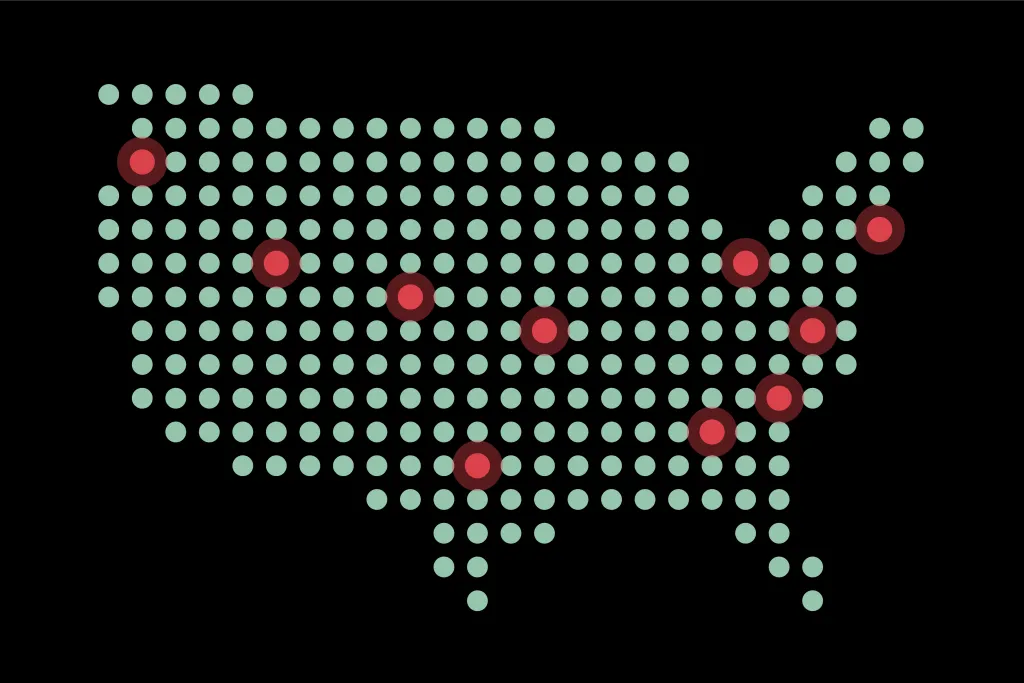
Since August 2018, 10 reporters at 10 public radio stations across the United States have participated in the Guns & America collaborative. They report stories from their local communities and share broadcast and digital content among each other’s stations and national platforms, with the goal of bringing context, nuance and a human face to one of the most divisive subjects of our day. Station-based reporters collaborate with a central lead team of editors, digital producers, and a project manager based at WAMU in Washington, D.C. They’ve produced more than 250 stories since inception. Read More
May 7, 2020
–
- Sarah Lutman ,
- Jeremy Bernfeld